Dance Styles + 10 Iconic Dance Sequences in Films
Here are some of the most popular dance categories and types:

Ballroom Dances
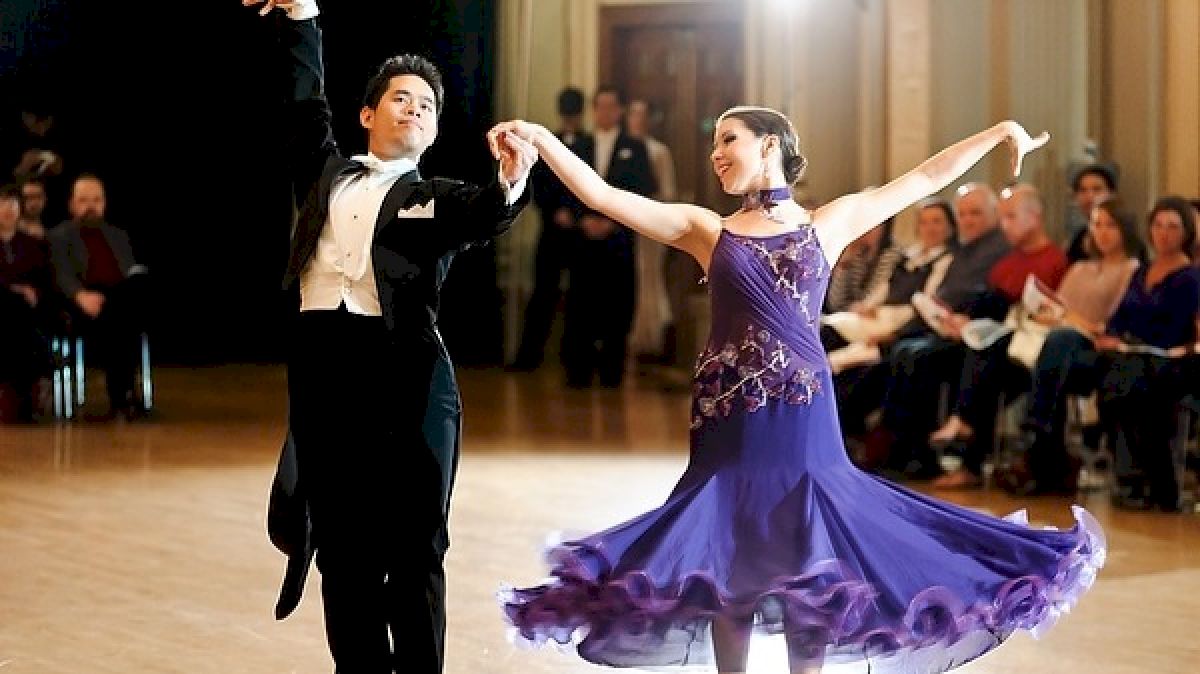
These dances started appearing first in Italy, during the early years of Renaissance. Popularity of this kind of entertainment quickly swept over the Europe, United States and the World. Although many other simpler and more easily preformed types of dances caused the ballroom dances to lose some of their influence, modern worldwide dancing audience started resurrecting these immortal dances in ever increasing pace.
- Waltz - This graceful and slow two person dance was first introduced in mid-19th century and was greatly popularized by the music of the famous composer Johann Strauss. Today this dance represents gold standard and the most famous dance of the ballrooms around the world.
- Tango - Originally created in the Argentinean region of Rio de la Plata, this dance is today known by many of its variations (Argentine tango, Uruguayan tango, Finish Tango and two types of Ballroom tangos - standard and American) and the fascinating sensual and energetic style.
- Cha-Cha-Cha - This incredibly rhythmic dance created in Latin America managed to meld together both the slow and very energetic movements, making it an instant hit among the dancers around the world.
- Rumba - Popularity of this Cuban dance came from its focus on sensual hip movements of dance partners. Since its creation in 1930s many types of Rumba were created, most notably Cuban Rumba (with the style of the African slaves which created it), Catalan Rumba (with Spanish flavor), Flamenco Rumba and African Rumba.
- Samba - Samba is a famous dance and musical genre that originated form the coast of Africa and land of Brazil. Today infectious rhythm of Samba is regarded as the national dance of Brazil, and its famous Brazilian Carnival gathers millions Samba dance fans every year.
- Mambo - This Cuban dance that accompanies the music of the same name was introduced in 1930s, and quickly managed to gain popularity with the exploits of famous musicians and dancers such as Perez Prado, Benny Moré, Tongolele, Adalberto Martínez, Rosa Carmina and Lilia Prado.
- Quickstep - Light-hearted and fast movement, powerful forms and syncopations, represent the core style characteristics of the Quickstep, one of the most popular ballroom dances today in the world. Originally developed in the 1920s dance scene of New York and the Caribbean, as the combination of the dances such as Charleston, a slow variation of Foxtrot, Peabody, shag, and one-step. The smooth and glamorous version of quickstep that is danced today across the world to 4/4 music beat of 48-52 measures per minute was standardized in 1927.
- Jive - Jive is one of the five most popular Latin dances and is also known under the names of swing, boogie or boogie-woogie. It is considered to be one of the liveliest of all Latin dances, promoting the happy and bloopy type of performances, with lots of knee movement and hip rocking. Its official ballroom jive variation that is commonly danced at a speed of 176 beats per minute was formalized in the 1990s.
- Bolero - Bolero is an Argentine dance, but it also has different international variations of the same name coming from Cuba and Spain. Today’s popular ballroom version of this dance is based on the Cuban bolero, and it is also known under the name “rumba”. This 2/4 or 4/4 music with a tempo of around 120 beats per minute that is well known all around the world.
African-American and Traditional Jazz dances

- Charleston - This extremely popular dance type was popularized by famous tune called "The Charleston" by composer and pianist James P. Johnson. Charleston craze soon took over the enthusiastic dancers of Prohibition era of United States.
- Swing - This dance is today synonym for the jazz and swing music of the 1920s-1930s.Because of the many styles of Jazz music, Swing also comes in many flavors - Lindy Hop, Jitterbug, Boogie Woogie, West Coast Swing and Rock and Roll.
- Tap Dance - This extremely popular form of dance was first introduced during 1920s Prohibition era in United States. Originally created by the African slaves, tap dancing came into the mainstream with the performances of Nicholas brothers. Few short years later, tap dancing conquered Hollywood and then entire world.
- Moonwalk - This extremely famous dance move that emuates the illusion of walking backwards was first performed by pop icon Michael Jackson in March of 1983, and ever since then it gained planetary fame. No single dance move ever created managed to receive this amount of popularity and recognition.
- Boogie-woogie - This quick and energetic style of dance became widely popular during 1930s and 1940s.
Worldwide Dances / Latin dances
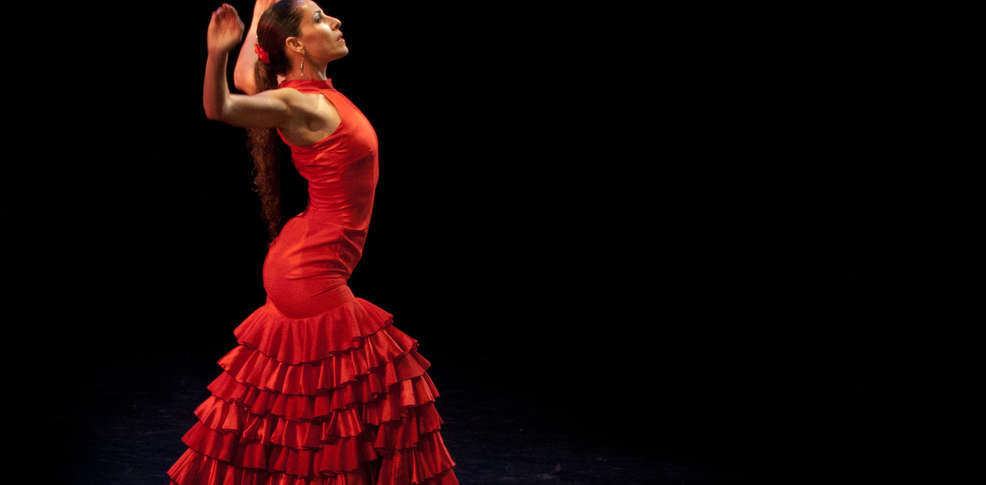
- Salsa - This Latin dance is today one of the most popular dances in Latin America, North America, Europe and Australia. It's very sensual form, energetic movement and innovative choreography that was influenced by Mambo, Changuyi and Rumba made it very popular all around the world.
- Flamenco - This famous Spanish dance originated from the region of Andalusia, and it gained its name only in 18th century. Its magical, passionate and energetic fusion of singing (cante), guitar playing (toque), dance and handclaps (palmas) made it famous in entire world and became one of the accepted heritages of entire humanity.
- Argentine tango - Among many types of tango dance, Argentinian dance strives to preserve original form of tango that was first created in the region of Rio de la Plata.
- Lambada - This famous dance that originated from Para, Brayil became internationally popular during 1980s. It managed to successfully fuse aspects of Forro, salsa, merengue, maxixe and the carimbó into unforgettable dance style.
- Polka - Appearance of polka in mid-19th century created one of the largest "dance crazes" that our world ever seen. It managed to influence countless other dances, became national dance of many European countries and is extremely popular in entire Western hemisphere.
- East Coast Swing - Swing dance has many variations, of which one of the most popular is the East Coast Swing. This social partner dance is known today under names of Eastern Swing, Jitterbug, American Swing, East Coast Lindy and Lindy originated between the 1940s and 1960s as the alternative to the other types of harder-to-learn swing dances.
- Capoeira - Capoeira dance is a unique dance that can be found in the combat moves of the Afro-Brazilian martial art of the same name that takes heavy inspiration from music, dance, and acrobatics. Practitioners of this martial art are famous for being highly athletic dancers who can take advantage of dance-like moves to perform quick and complex maneuvers that can deliver a wide variety of kicks, spins, jumps and other techniques used in combat. Today, Capoeira is famous as one of the most celebrated cultural heritages of Brazil and South America.
- Country/ Western Dances - - The country dance style is a social dance activity that is closely associated with American country and its Western traditions. It is made not from a single dance but encompasses many forms and styles of dance that can be performed to country-western music. No matter the type of music style or dance type, Country dance gatherings employ strong dancefloor etiquette and even ability to perform multiple dances styles on a dance floor at the single time.
Professional performance dance

Professional dancing was first introduced in the early years of Italian Renaissance when music, dance, arts and poetry started to rise in popularity after the millennia of medieval stagnation. Refined by the efforts of the France and Russia, ballet became the premier technical concert dance. Hailed as one of the most revered and most complicated dance of all time, ballet continued its rise to worldwide domination. In the modern times, many other professional dances came to be, such as Contemporary dance, Modern Dance, Concert dance, but none of them managed to surpass the complexity, physical strain, and heritage of ballet.
- Ballet - Ballet is without any doubt one of the most highly technical and famous of all performance dances. It was originally created in 15th century Renaissance Italy, but it received popularization in countries such as France and Russia. It’s incredible popularity and influence has had a profound impact on techniques found in many other dances, and has even morphed the cultural histories of many countries around the world.
- Contemporary dance - Contemporary dance is a highly complicated type of modern performance dance that originated in the mid-20th century as an alternative to classical dance styles (such as ballet), modern styles (free dance) and Jazz dance. Its focus on free leg movement, strong stress on the torso, disordered choreography, unpredictability, multiple and simultaneous actions, improvisation, and non-standardized costumes, sets, and lighting has pushed this dance into the forefront of modern art dance scene.
- Concert Dance - Concert dance (also known as stage dance) is any choreographed dance that is performed for an audience, usually at the theatre or an organized gathering setting with the presence of set music. It is a polar opposite of social or participation dances, where participants can freely dance how and when they wish. Most popular concert dances are Ballet, Acrobatic dance, tap dance, modern dance, classical Indian or Persian dances and others.
- Modern Dance - Modern dance is an influential performance dance that originated as a reaction against the classical ballet and its movement style. Shaped by many factors in late 19th and early to mid-20th century, modern dance evolved into a popular free dance style that includes elements of performance art, release technique, improvisation and contact improvisation.
Modern Dances

Advancements in music technology brought the birth of many new types of dances. Introduction of electronic and rock music brought the era of House, Punk, Rave and Disco dance. Faraway country of India did not cared much for those styles, and in accordance to the deeply seeded religious beliefs, they incorporated dance of their gods to everyday life and was and profitable Bollywood movie scene.
- House dance - After the years of popularity of Disco, the genre of House music and house dance became born in New York and Chicago clubs. Built on top of subtler rhythms, riffs of the music and influences of jazz, Latin, soul, funk, R&B, and many other music styles, this social dance quickly found its way into homes and clubs across the entire world.
- Punk dance - Born as an extension of 1960s garage rock, the punk rock managed to attract fans who enjoyed not traditional social dances of before, but more energetic and sometimes violent dance style of moshing (sometimes called slam-dancing) and headbanging. This dance styles were characterized by the strong and full body contact of live band audience, with frequent bumping and jostling both alone and in groups.
- Rave dance - Fueled by the unending focus on pulsating beats, loud volume and psychedelic music effects, dancers of rave music are free to create their freestyle of movements, with no rules about dance routines or synchronized moves, usually in dark and crowded venues of dance clubs, nightclubs, and festivals. Dancers are encouraged to find inspiration in music, other people, and their mood.
Hip-hop & Funk dance

Dancing style of Hip-Hop evolved from the music style that was first introduced during 1970s. Powered by the great popularity, exposure in media, movies and television programs, hip-hop dances found a great foothold in United States, France, United Kingdom and South Korea. A very similar style called Funk was also created during 1970s, and is today regarded as one of the most influential pieces of Hip-hop dance styles.
- Breakdance (Breaking) - One of the most athletic dances in the world, Breakdance, have originally found its popularity in the 1970s as the street dance in the New York’s Bronx. Since then it has spread all around the world where it was viewed as one of the most unique dance styles ever made. Usually danced solo, this dance requires talented dancers to perform the series of either choreographed or freeform dance and athletic movements alongside usually breakbeat, hip-hop or funk music.
- Bounce - Born in the 1980s as a mix of New Orleans hip-hop music and the traditions of the Mardi Gras Indian chants, Bounce dance can today be danced both in its common and hypersexual form. Since it is so closely connected with the traditions of the Mardi Gras culture, many forms of Bounce today remain to be highly regional and can rarely be seen dancing outside of the music scenes of New Orleans, Miami, Baltimore, and other music hubs.
- Electric boogaloo - Funk style of hip-hop was popularized not only by its music but also by the worldwide acceptance of the famous dance style called Electric Boogaloo, which was originally promoted in the 1970s by the dance group of the same name. Danced both by individuals and groups in both free form and choreographed manner, Electric Boogaloo is filled with the wide variety of moves that focused on the movement of legs, hips, knees and frequent use of exaggerated robotic-like moves.
- Street Jazz - Created with the influences of African American slaves, Jazz dance gained popularity in the early 20th century as any form of dance that was performed alongside then new Jazz music. Highly improvisational and freeform, Jazz dance quickly morphed into a performance dance that emulated elements of ballet. Today, Jazz dance is enjoyed in many forms which are collectively called “modern jazz dance”.
10 Iconic Dance Sequences In Film
“The Red Shoes” (1948)

“Black Swan” cribs from a number of films (not in a bad way, mind you), but none are quite as influential as Powell & Pressburger‘s “The Red Shoes.” Like Aronofsky’s film, it tells the story of a dancer in the ballet of a classic story — in this case, Hans Christian Andersen’s titular fairy tale — while simultaneously retelling that same story. The film’s a classic as a whole, one of the pair’s very finest films, but the key section is the ten minute “Ballet of the Red Shoes,” which sees Moira Shearer’s character dance up a storm in a ballet created especially for the film by composer Brian Easdale and choreographer Robert Helpmann. It’s perhaps the greatest dance sequence ever shown on film — the ballet itself is a feast, but as it runs on, the directors pull off every trick they had available, bursting through the proscenium arch to use POV shots, dissolves and special effects.

“Pulp Fiction” (1994)
For a movie as singularly unforgettable as “Pulp Fiction,” full of moments and characters and snippets of dialogue that still resonant or replay in your mind 16 years later, the most iconic moment might be the dance sequence. Thug Vincent Vega (John Travolta) has been tasked with squiring his boss’ wife Mia (Uma Thurman) for a night on the town, which brings them to Jack Rabbit Slim’s, a ’50s themed restaurant that seems to have been constructed entirely inside director Quentin Tarantino’s brain, filled with pop culture relics both noticeable and obscure. It’s here that the two take part in a dance contest, moderated by an Ed Sullivan impersonator and set to the tune of Chuck Berry’s “You Never Can Tell.” It’s here that the meta-textual bubble that is the Tarantino-verse threatens to burst: Travolta, surrounded by a physical reality constructed of pop culture debris, is sending up his own iconic movie star image as a dancer in such films as “Grease” and “Saturday Night Fever” and in the process is creating something bold and new and totally refreshing. He even does dances that reference other moments in popular culture, like “The Batman.” The moment is, for all its smarty pants wink-wink baggage, totally euphoric and rings completely true. Even if you’re a gangster or a gun moll, sometimesall you’ve got to do is dance.
“The Blind Swordsman: Zatoichi” (2003)
Music plays a pivotal role in Takeshi Kitano’s work, as he’s known for teaming with classical composer Joe Hisaishi. But when he took on “The Blind Swordsman: Zatoichi,” he went in a different direction, employing Keiichi Suzuki for possibly his most musical picture yet. “Zatoichi” is a film alive with the rhythms and staccato beats of abbreviated sword fights intermingled with more mundane accouterments like the click-clack of sandals against brick, or the abrasive slam of hammer against wood. This is most prominent in the film’s joyous tap-dance sequence, ending the film riotously and bringing our characters full circle. In their heavily-choreographed soft-shoe number, all those wronged by the tragedy of the story are freed to embrace their inner-Astaire, a wonderful example of Kitano’s oft-ignored warmth and sense of community in his body of work.

“Singin’ In The Rain” (1952)
Is Gene Kelly the perfect human? The fact that the man tap danced on roller skates and with an animated mouse strongly indicate that he was. “Singin’ in the Rain” is by far his most beloved work, and for good reason too. The technicality and precision combined with the pure joyfulness and sense of fun expressed by of Kelly, Debbie Reynolds and Donald O’Connor is so infectious, we just don’t mind when the movie stops for an extended routine. All the numbers move along at such a clip, and are so packed full of stunts and tricks to make you gasp. Even the simple sentiment expressed in “Good Morning” is punctuated with a stunning tap routine by the trio. We love Mr. Kelly for his amazing feats of dance, but the iconic ‘Singing in the Rain” is his most memorable number because it is so heartfelt, silly, and fun. No one does a lovesick soft-shoe like him. And you have to give it up for Donald O’Connor– when paired with the force that is Gene Kelly, he just about steals the whole damn show. “Make ‘Em Laugh” is his chance to showcase his talents with this body-punishing feat of virtuosic physical comedy, which happens so fast you can barely take it all in.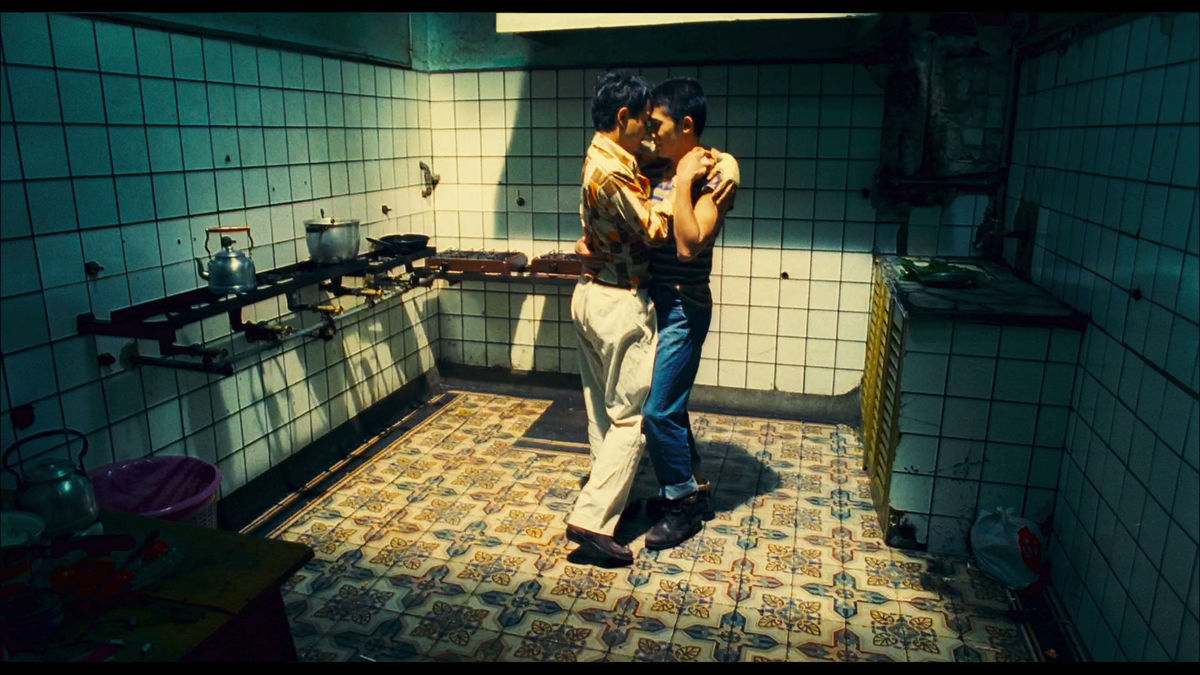
“Happy Together” (1997)
What better way to fix a destructive, shitty relationship than to make a trip to Argentina? It’s all for naught in Wong Kar-wai’s 1997 relationship film, which nabbed him a Best Director award at Cannes. Leslie Cheung and Kar-wai regular Tony Leung play a couple that follow a cyclical pattern of argument, maltreatment, break-up, and reconciliation throughout the movie, despite knowing the futility of their bond. While the film doesn’t shy away from showing their destructiveness towards one another (Leslie’s character takes his new boyfriends to Tony’s place of work constantly, etc.), the subtler dancing scenes, which serve as a greater metaphor for the pair, creep into the consciousness and leave an uncomfortable impact well after the last credit rolls by. Here, a pissed-off Cheung orders his partner to practice the steps by himself, with Leung proceeding to follow instructions, devoid of emotion, hoping only to please his love. It says a million, most importantly that their romantic connection isn’t black and white, and the director shows the complexity of emotions that make up their being. He does it so finely that, much like them, we know it’s a bad idea for them to be together but are fooled into thinking it might be worth all of the pain.
 “All That Jazz” (1979)
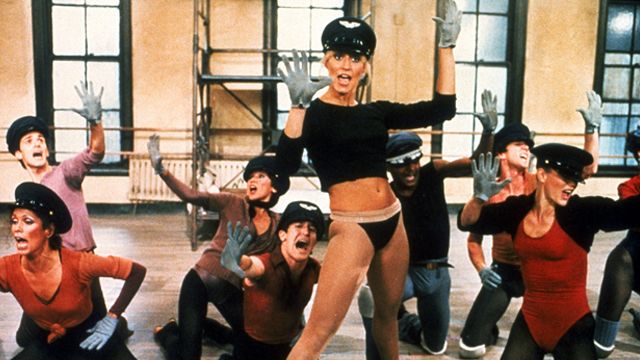
It might surprise some of you that David Fincher marks Bob Fosse’s autobiographical masterpiece “All That Jazz” among his favorite films, but actually, it makes perfect sense — its portrait of a workaholic film director and choreographer, based heavily on Fosse himself, and constantly on the verge of a heart attack, must surely resonate with the obsessive filmmaker. But even if it doesn’t, the film’s worthy of inclusion on anyone’s list on merit alone, featuring perhaps Roy Scheider’s greatest performance, and, most importantly, a series of killer musical numbers. Virtually any of them could have been included here, but special mention must go to the grand finale. As Scheider’s Joe Gideon nears death, he hallucinates a self-eviscerating variety show in front of an audience of friends and family, which turns into a musical number, set to a version of The Everly Brothers’ “Bye Bye Love.” Fosse was one of the greatest shooters and editors of musical numbers ever, and he’s on cracking form here, with a bravura scene that’s not quite like anything you’ve seen before, and it’s basically responsible for Lady Gaga’s entire career. And the ending, with the sound dropping out, is killer.
 “Band Of Outsiders” (1964)
While dance sequences and musicals were certainly not a new element to the film landscape in the 1960s, Jean Luc Godard’s introduction of the random non-sequitur dance sequence may have been just one of the electric New Wave techniques he ushered in during his relatively brief, but arresting halcyon days (when you think about it, his reign only lasted from ’59-’67). Would-be lovers and criminals Anna Karina, Sami Frey, Claude Brasseur philosophize, plan their heist in a cafe over drinks and cigarettes, a jukebox number comes on (score by the great Michel Legrand) and then suddenly the trio fall in place with a chorus line-like dance for the ’60s hipster set (now famously known as “The Madison dance”). So unexpected, the scene is certainly iconic and perhaps one of the more memorable sequences from the French New Wave. To wit, Quentin Tarantino named his production company A Band Apart — Godard’s guys-and-girl-plan-a-heist/ go-on-the lam film is called “Bande à part” in French — and his “Pulp Fiction” dance sequence also feels like another hat tip. Semi-embarrassing/prideful extra credit: This writer once memorized this dance and skipped along to picture in his early salad days.
 “Footloose” (1984)
Dance movies that are NOT musicals sometimes ask the viewer to suspend a lot of disbelief in the process– of course there’s a choreographed routine at the prom, a la “She’s All That,” (true confessions time: this writer actually did do this). “Footloose” is no exception to this phenomenon. Yes, when the ban on dancing is finally lifted in this little podunk Midwestern town, there are somehow kids busting the Bronx’s best breakdancing moves — just go with it, ok? On the more realistic end of things, we are partial to the sweet “Let’s Hear it For the Boy,” where Kevin Bacon teaches Chris Penn (Sean’s dearly departed bro) how to actually dance. Of course, he busts out some overly advanced tricks for a kid who just learned how to snap, but we suggest swiping some of Penn’s random-er dance moves for your next wedding reception. However, if we HAD to choose one (this was a real Sophie’s Choice; we wish this entire feature was about “Footloose,” we haven’t even mentioned Sarah Jessica Parker yet!) we’d have to say the more iconic number is also the most outlandish– Bacon’s Olympic-worthy gymnastics (there is a high bar portion) angry dance in the barn to “Never” by Moving Pictures. Ever felt so frustrated and stifled there’s nothing left to do but dance it out? “Never” is the epitome of that feeling and Bacon’s sweaty, acid-washed intensity (coupled with the athleticism of his dance double) just makes it all work. We buy it.
“Flashdance” (1983)
 We’ll include “Flashdance” even though Jennifer Beals barely did any dancing other than shimmying that mop of hair around (the heavy lifting was done by a dance double). Fun fact: “Flashdance” was produced by Jerry Bruckheimer and the dance numbers are executed like bombastic action sequences. The famous water bucket scene in the strip club is all back-lighting and flying water droplets; the climactic “What a Feeling” is a gold standard of the finest ’80s choreography has to offer (see also, “Cats,” “Stayin’ Alive”), but the “She’s a Maniac” rehearsal number, which configures Alex’s body as a sinewy finely-tuned machine, is really the one that has left the most indelible impression on pop culture. Much like “Footloose,” this is the dancer all alone, just dancing for the sake of sanity, the filmmaker using the dance to illustrate this aspect of the character. Turns out David Cronenberg and Brian DePalma both turned down the director’s chair before Adrian Lyne stepped up to the plate and it would be fascinating to see what those other two guys might have turned out with the story of a girl with big dreams working as a welder by day and an exotic dancer by night. It’s still one of the most iconic ’80s dance films, was a huge box office smash, AND it also introduced the world to break dancing with a short cameo by the Rock Steady Crew.
 “An American In Paris” (1951)
How do you finish “An American In Paris?” You’ve just enjoyed 2 solid hours of what many describe as a perfect film, with Gene Kelly charm, Gershwin classics like “I’ve Got Rhythm,” the coquettish gamine Leslie Caron in her big screen debut, and enough song and dance to fill two musicals. What more can be done? If you’re Vincente Minnelli, you swing for the fences with a 16-minute, $500,000 (an outlandish sum in those days) psychedelically trippy ballet sequence, and bill the thing as “The Greatest Dance Entertainment Projected on The Screen” in the trailer. Which is probably true. Minnelli let choreographer Kelly unleash every tool in his arsenal and the result is something way ahead of it’s time, and a fine example of Kelly’s contemporary style melded with traditional ballet (Caron’s milieu). Caron and Kelly have riveting chemistry, and these expressive technicians are allowed to play throughout multicolored ever-changing sets and multiple costume changes. It’s really a short film unto itself. Kelly choreographed the entire picture, and earned his only Oscar that year, an honorary one for his versatility as an actor, singer, dancer and achievements in choreography. And it paid off for Minnelli with his own little gold man for Best Picture. It goes without saying that this is a must-see. (Trailer below, unfortunately finding the real thing on Youtube has proven to be difficult.)
 “Cabaret” (1972)
The opening number from “Cabaret”, “Wilkommen” quite literally welcomes you into the world we will be inhabiting for the duration of the film. Dark, tattered, tacky opulence is the name of the game in “Cabaret,” and look no further than the languid, zombie-like Kit Kat girls bedecked in sparkly tap pants and frowns, shuffling sexily around the the preening, lipsticked EmCee welcoming you to the show. Bob Fosse won the Best Director Oscar for this film in 1972 and his skill of combining movement, style and story is in top form. He takes traditional jazz dance movement and skews it– making it crooked, turned in, drooping, yet also perfectly placed, and in “Cabaret,” he achieves a lazy raunchiness that is the perfect backdrop and metaphor for this dark story. “Mein Herr” is the more distilled, refined version of this aesthetic, and Liza Minnelli is fantastic in it, but “Wilkommen” builds the stage on which the rest of the numbers shine.

Comentários
Postar um comentário